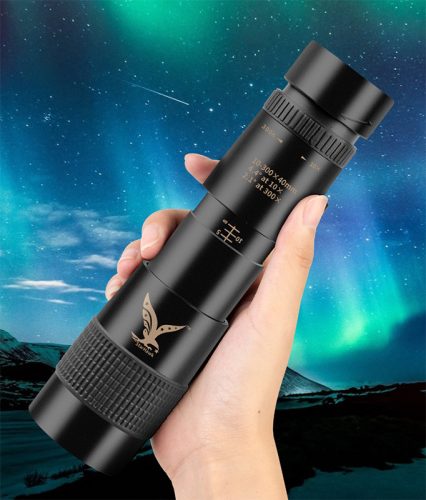
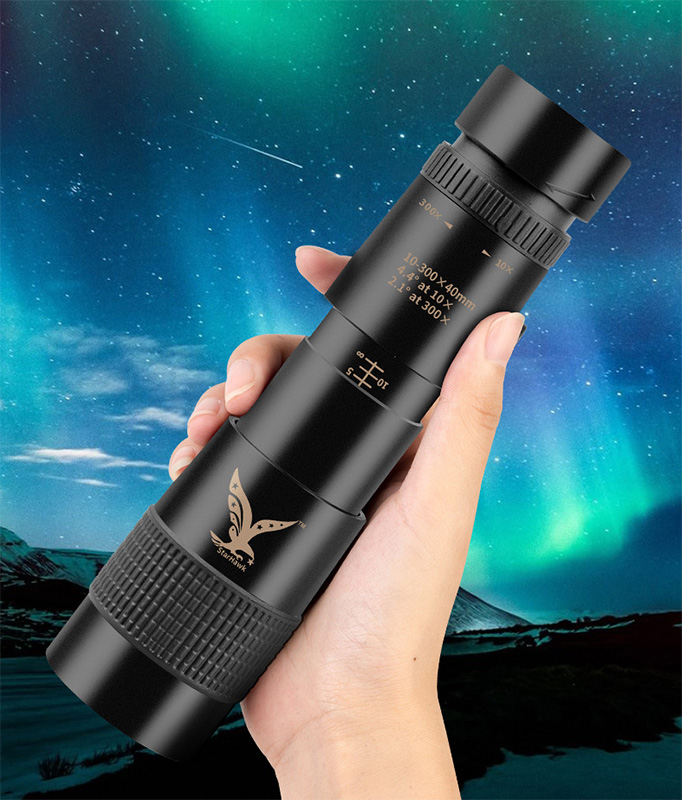
As someone who likes photography as an occasional hobby, and is also a scientist who can spot techno-babble* in adverts, I wondered if I was the only one very suspicious of these telescope / monocular / smart phone lenses. You know, the ones claiming incredible magnifications and image quality equal to a lens costing 50 to 100 times more than the one being displayed.
I am not alone in being very sceptical of their image quality! Read this excellent review by an expert photography blogger to learn just how bad these devices are. https://www.blog.jimdoty.com/?p=27085 Jim bought and tested these lens, and the first pair of test images show immediately that the quality is very poor compared to a real camera! Even without the real camera’s image, it is obviously a low-quality image.
Then I came across this youtube review (below) https://www.youtube.com/watch?v=vqvZZLdaGq0 . Here Ondawire shows the poor quality of the device in detail. He doesn’t bother to comment on the image quality, as it is so obviously low quality. He comments on the lens bracket being so easy to break, how hard to use it was, the long delivery time, the zoom not reaching the standard shown in the adverts, and so on. And then someone discovered that a small part of his scathing review was edited and used to promote the thing!http://
*Techno-babble – a stream of technical or scientific-sounding words linked together which are there to impress the listener or reader, but aimed at people who don’t know what the words mean. But hey, it sounds good. Meaningless but good.
The term was used in Star Trek scripts and then edited by a specialist writer to sound clever. EG Kirk: What’s the problem with the engines? Scottie: We can’t get enough power, Capt’n, because {four seconds techno-babble, please} Which then becomes Scottie: We can’t get enough power, Capt’n, because the flux capacitors are hyper-resonating with the dilithium crystals to form an Einstein-Hawkins duplex difluorophinoamine exclusion to the Heisenberg compensator’s magnetron diluter.
Avoid these like the plague (or a mask-less Covid-19 carrier who is sweating and coughing non-stop in your face)
Some adverts for these claim they are 4K devices. but 4K is a television and video specification, not a bit of glass specification! ALL lens could be called 4K by a cowboy supplier, but it is meaningless. They also claim it has image stabilisation – they mean a plastic fixing bracket and tripod, not an in-lens motor-driven moving element of the lens array controlled by the computer of a real camera when it detects small vibrations causing blur. They also sometimes claim night vision abilities. REALLY! Is it packed with photoelectron multipliers and a hidden power supply, to boost the brightness at night? I doubt it. Like I doubt the moon is made of green cheese.
Different adverts claim it was invented and just released by NASA, or Johns Hopkins Univ. scientists, or Swedish engineers, or Mickey Mouse’s son – I could believe that last one however.